
 admin
06/18/2026
admin
06/18/2026
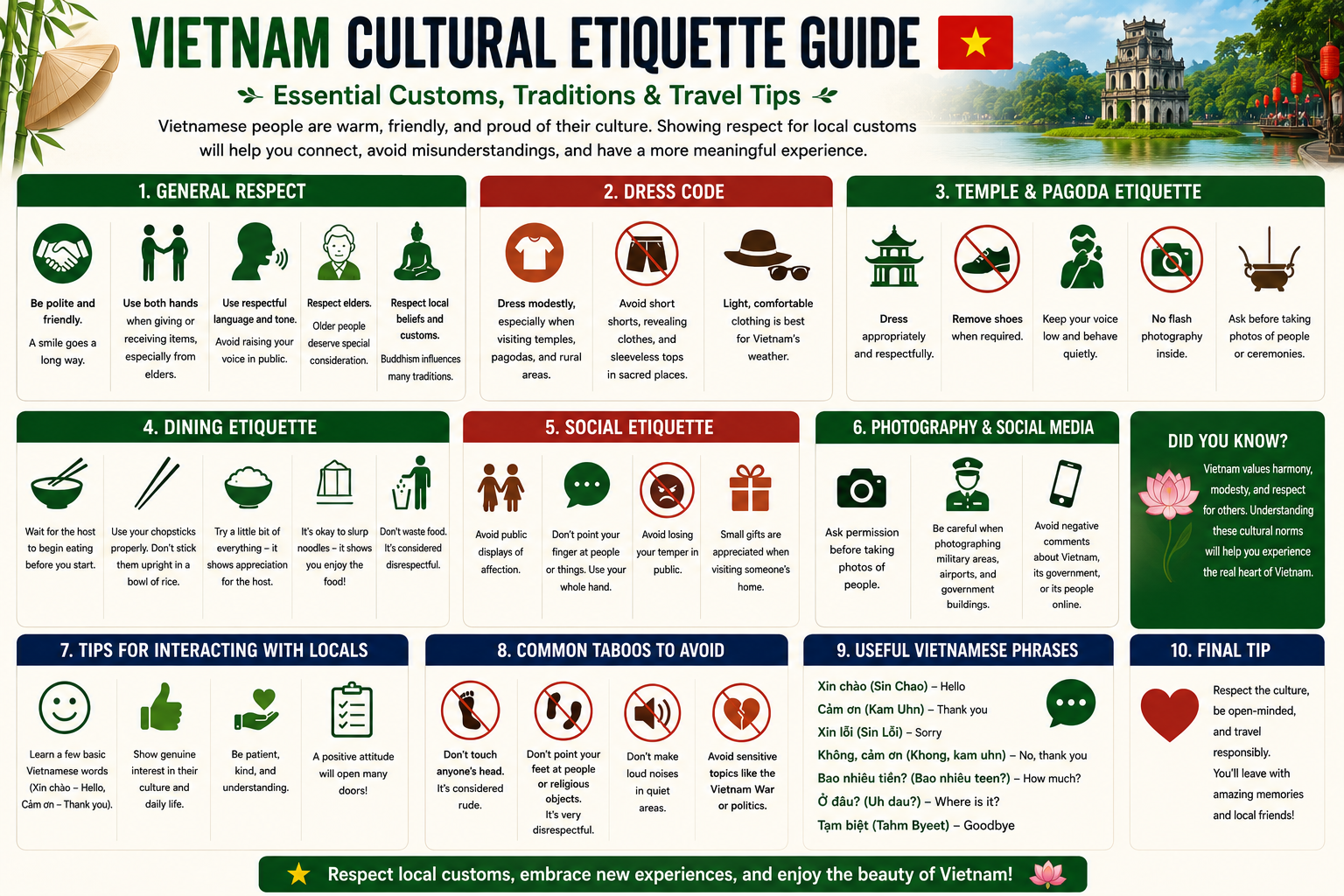
Vietnam is famous for its stunning landscapes, rich history, delicious cuisine, and warm hospitality. However, understanding local customs and cultural etiquette can significantly enhance your travel experience and help you build positive interactions with local people.
While Vietnamese people are generally welcoming and understanding toward foreign visitors, showing respect for local traditions can leave a lasting positive impression.
This Vietnam Cultural Etiquette Guide covers the most important customs, social norms, and travel etiquette tips every visitor should know before arriving.
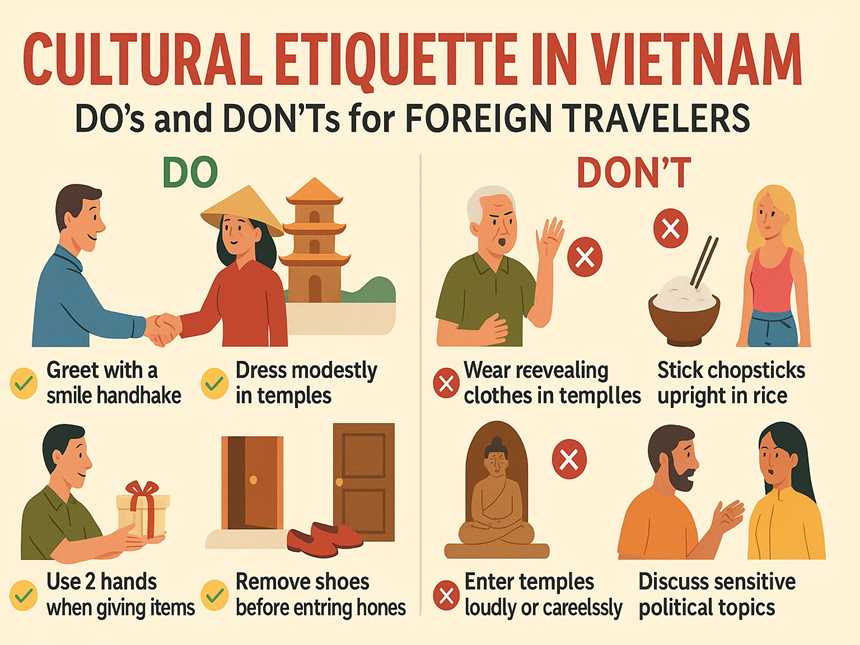
Respect is deeply embedded in Vietnamese culture.
Showing courtesy and cultural awareness can help travelers:
Even simple gestures often make a significant difference.
👉 Internal Link
Anchor Text:
Vietnam Travel Tips for First-Time Visitors
Vietnamese society is strongly influenced by:
Many traditions are shaped by centuries of cultural development and influences from Confucianism, Buddhism, and local customs.
As a visitor, understanding these values can help explain many everyday interactions.
Vietnamese greetings are generally polite and respectful.
Older individuals are often greeted first as a sign of respect.
Visitors do not need to memorize complex rules, but displaying courtesy is highly valued.
Respect for older people is one of the most important aspects of Vietnamese culture.
Examples include:
Tourists are not expected to follow every local custom perfectly, but respectful behavior is always appreciated.
Vietnam is home to thousands of temples, pagodas, and religious sites.
When visiting:
Recommended:
Religious sites are places of worship.
Some locations restrict photography.
Observe local behavior before entering certain spaces.

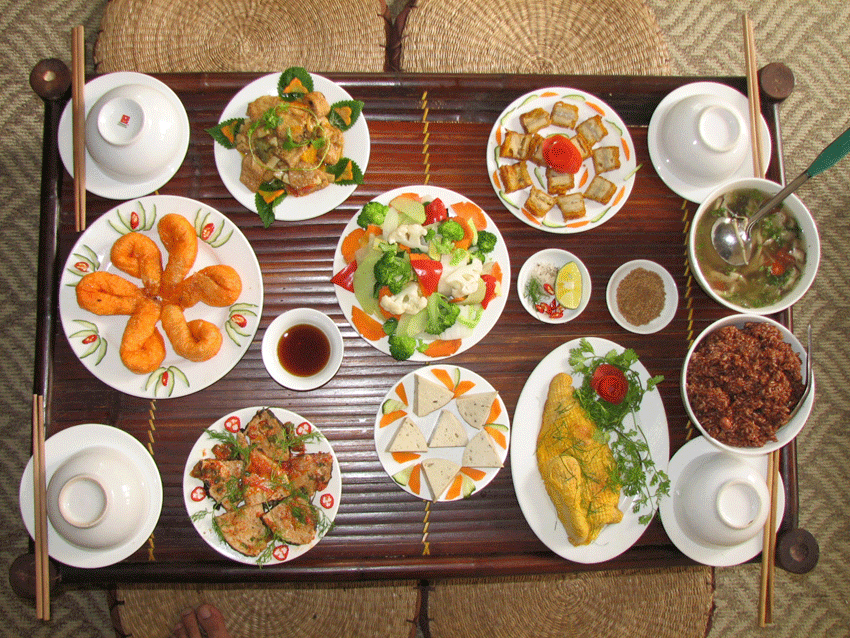
Food plays a central role in Vietnamese culture.
In family settings, people often wait until everyone is served.
Meals are frequently shared among the group.
Accepting local dishes is often viewed positively.
Avoid sticking chopsticks vertically into a bowl of rice, as this resembles funeral offerings.
If invited into a Vietnamese home:
Many households request shoes be left at the entrance.
Optional but appreciated.
Examples:
Vietnamese hosts often take pride in welcoming guests.
Vietnamese culture generally values modesty and respect.
Public arguments are uncommon.
Particularly in religious and rural communities.
Courtesy is often appreciated more than urgency.
Social norms may vary from what travelers are accustomed to.
Vietnam offers incredible photography opportunities.
However:
Especially when photographing:
Some locations prohibit photography.
Focus on respectful and ethical travel photography.
Negotiation is common in:
Helpful tips:
Most transactions are expected to remain respectful and good-natured.
Vietnam’s transportation system can seem busy to first-time visitors.
Helpful reminders:
Particularly at airports and stations.
Traffic patterns may differ from your home country.
Polite communication is always appreciated.
Vietnamese holidays offer excellent opportunities to experience local traditions.
Major celebrations include:
During these periods, visitors may witness:
While locals are generally understanding, try to avoid:
Dress modestly.
Unless clearly permitted.
Remain calm and respectful.
Observe and follow local behavior when uncertain.
Respect is highly valued throughout Vietnamese society.
Absolutely.
Many travelers describe Vietnam as one of the friendliest destinations in Asia.
Visitors frequently praise:
Although language barriers may occasionally arise, friendliness often bridges the gap.
Visitors should avoid disrespectful behavior at religious sites, aggressive bargaining, and loud public confrontations.
Tipping is appreciated but generally not mandatory.
Yes, in most tourist areas. However, modest clothing is recommended when visiting temples and religious sites.
Yes, particularly in traditional markets and some tourist shopping areas.
Yes. Vietnam is widely known for its hospitality and welcoming attitude toward visitors.
Understanding cultural etiquette is one of the best ways to enrich your travel experience in Vietnam. While visitors are not expected to know every local custom, showing respect, patience, and curiosity goes a long way.
By learning a few simple cultural norms, travelers can build meaningful connections, avoid misunderstandings, and gain a deeper appreciation for Vietnam’s traditions and way of life. Whether you’re exploring bustling cities, rural villages, ancient temples, or vibrant food markets, cultural awareness will help make your journey more rewarding.


