
 admin
06/15/2026
admin
06/15/2026
Vietnam is one of the most fascinating countries in Southeast Asia, offering an incredible variety of landscapes, cultures, and travel experiences. From the bustling streets of Hanoi and Ho Chi Minh City to the breathtaking mountains of Sapa and Ha Giang, transportation plays a crucial role in helping travelers explore the country efficiently.
Fortunately, Vietnam offers a wide range of transportation options suitable for every budget and travel style. Whether you prefer domestic flights, overnight trains, sleeper buses, private transfers, or ride-hailing apps, getting around Vietnam is generally affordable and convenient.
This complete Vietnam Transportation Guide explains everything travelers need to know before visiting Vietnam.
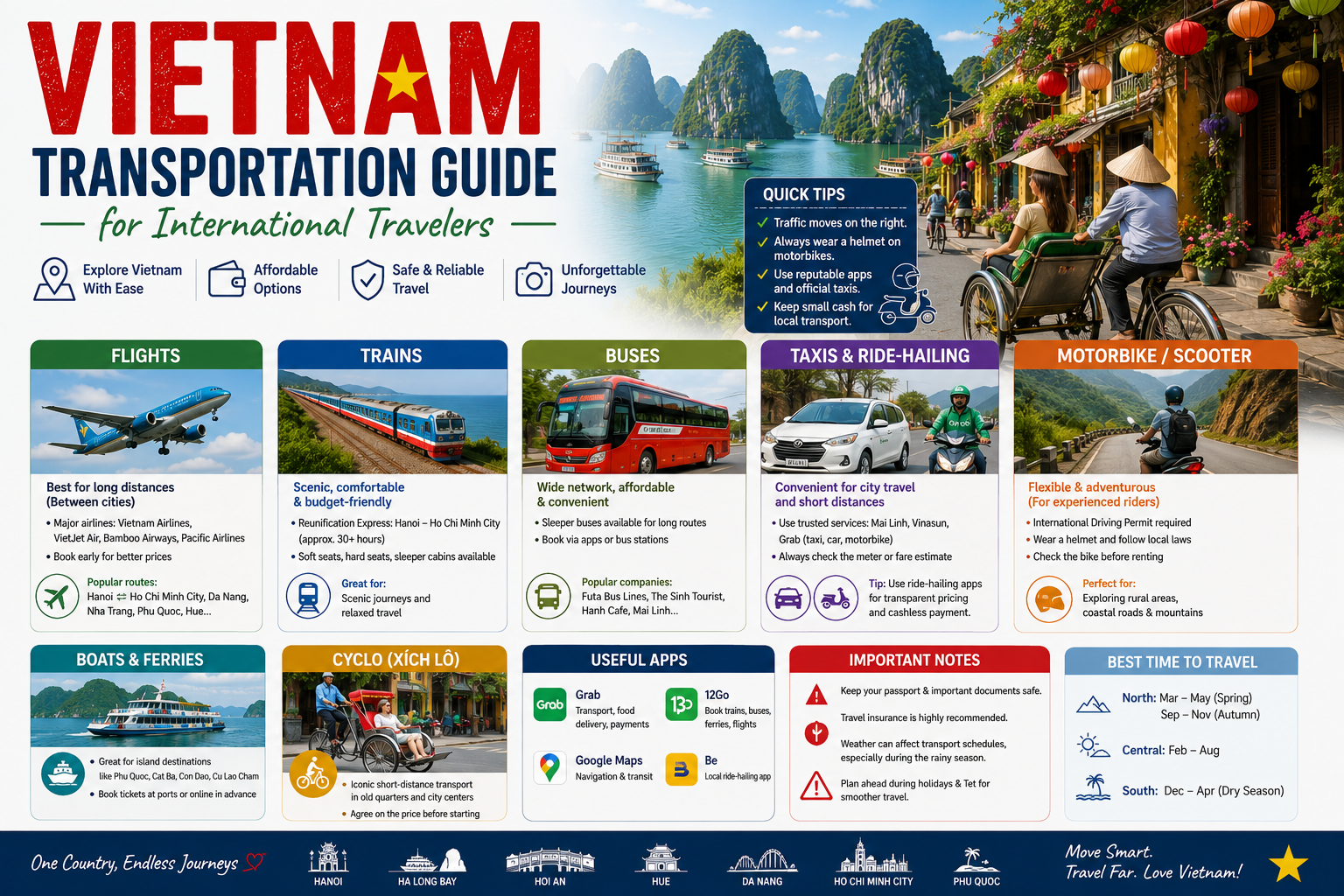
Because Vietnam stretches more than 1,600 kilometers from north to south, transportation choices often depend on:
For example, travelers visiting multiple regions often combine flights with local transportation for maximum convenience.
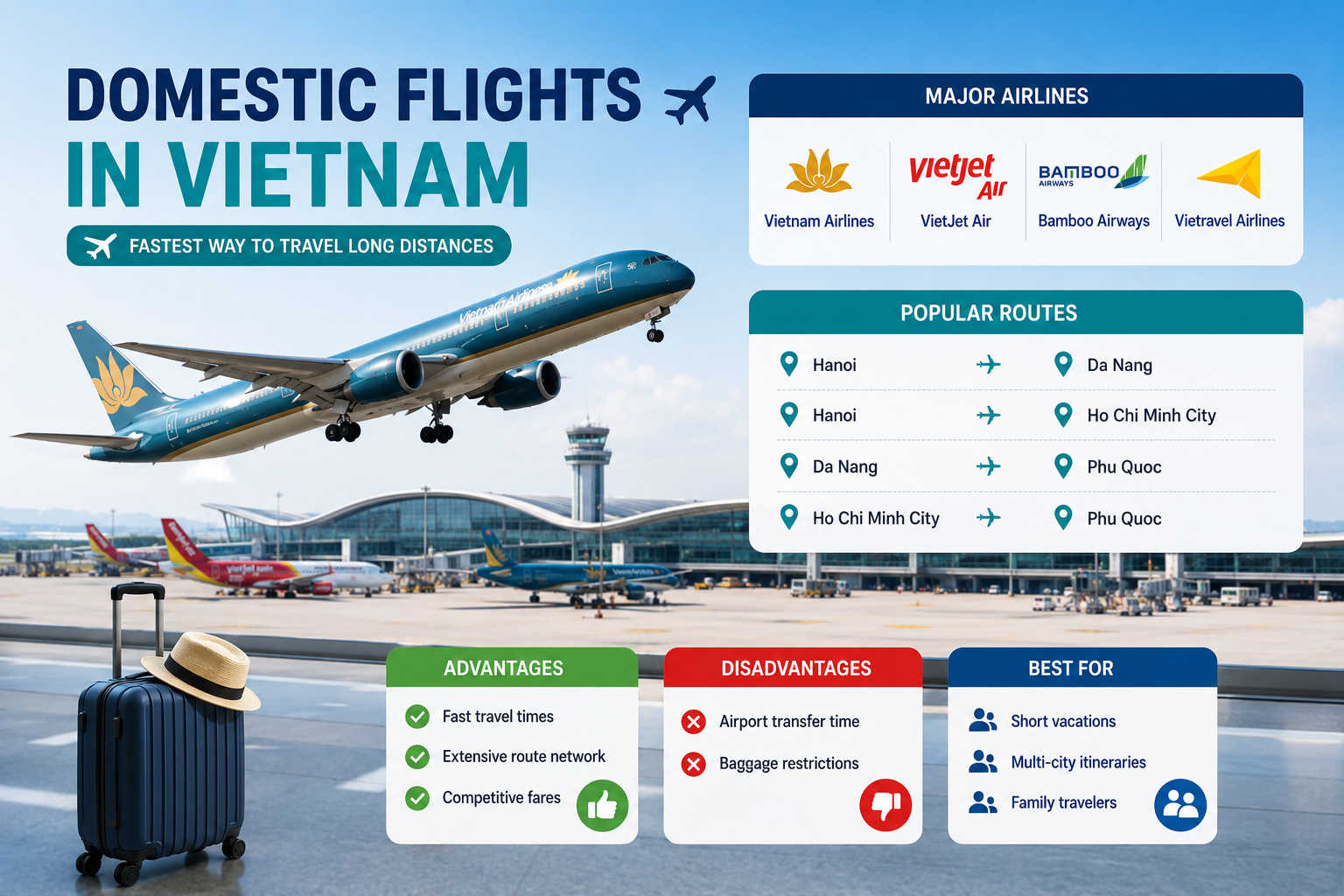
For long-distance travel, domestic flights are usually the fastest option.
Major airlines include:
Popular routes:
Best For:
Domestic Flights in Vietnam
Vietnam’s railway system remains one of the most scenic ways to explore the country.
The famous North-South Railway, often called the Reunification Express, connects major cities throughout Vietnam.
Popular train routes:
Sleeper buses are extremely popular among backpackers and budget travelers.
Common routes include:
Many travelers prefer private transportation for convenience and comfort.
Private transfers are especially popular for:
Popular routes include:
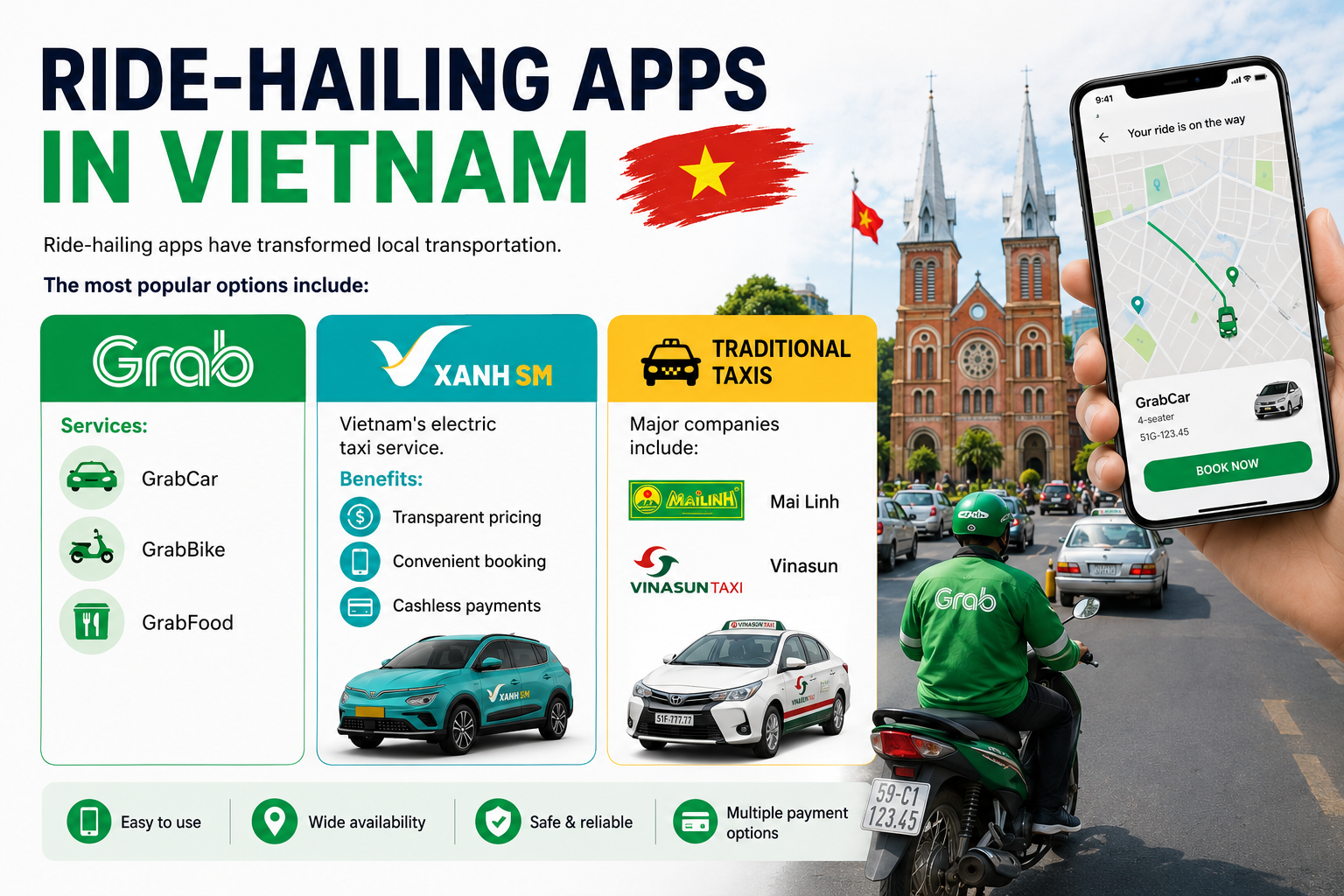
Ride-hailing apps have transformed local transportation.
The most popular options include:
Services:
Vietnam’s electric taxi service.
Benefits:
Major companies include:
For adventurous travelers, motorbike rentals offer flexibility and freedom.
Popular destinations:
Best Options:
Old Quarter attractions are often within walking distance.
Best Options:
Traffic can be heavy during peak hours.
Best Options:
The city is easy to navigate and tourist-friendly.
Options:
Options:
Options:
Options:
Average transportation costs:
| Transportation Type | Average Cost |
| GrabBike | $1–5 |
| GrabCar | $3–15 |
| Sleeper Bus | $10–30 |
| Train Ticket | $15–80 |
| Domestic Flight | $30–150 |
| Private Transfer | $40–200 |
To make transportation easier:
Recommended:
Small vendors may not accept cards.
Heavy rain may affect some travel routes.
Domestic flights require identification.
A combination of domestic flights, trains, and ride-hailing services is often the most efficient option.
No. Vietnam remains one of the most affordable countries in Asia for transportation.
Yes. Grab is widely available in major cities and tourist destinations.
Yes. Vietnam’s railway system is generally considered safe and reliable.
Only if you are comfortable riding and have the appropriate driving documentation.
Vietnam offers a diverse transportation network that makes exploring the country easier than ever. Whether you choose domestic flights for speed, trains for scenic journeys, sleeper buses for affordability, or ride-hailing apps for convenience, there is an option for every type of traveler.
By understanding the strengths of each transportation method and planning ahead, you can travel comfortably between Vietnam’s vibrant cities, stunning beaches, cultural landmarks, and mountain regions while making the most of your adventure.


