
 admin
06/13/2026
admin
06/13/2026
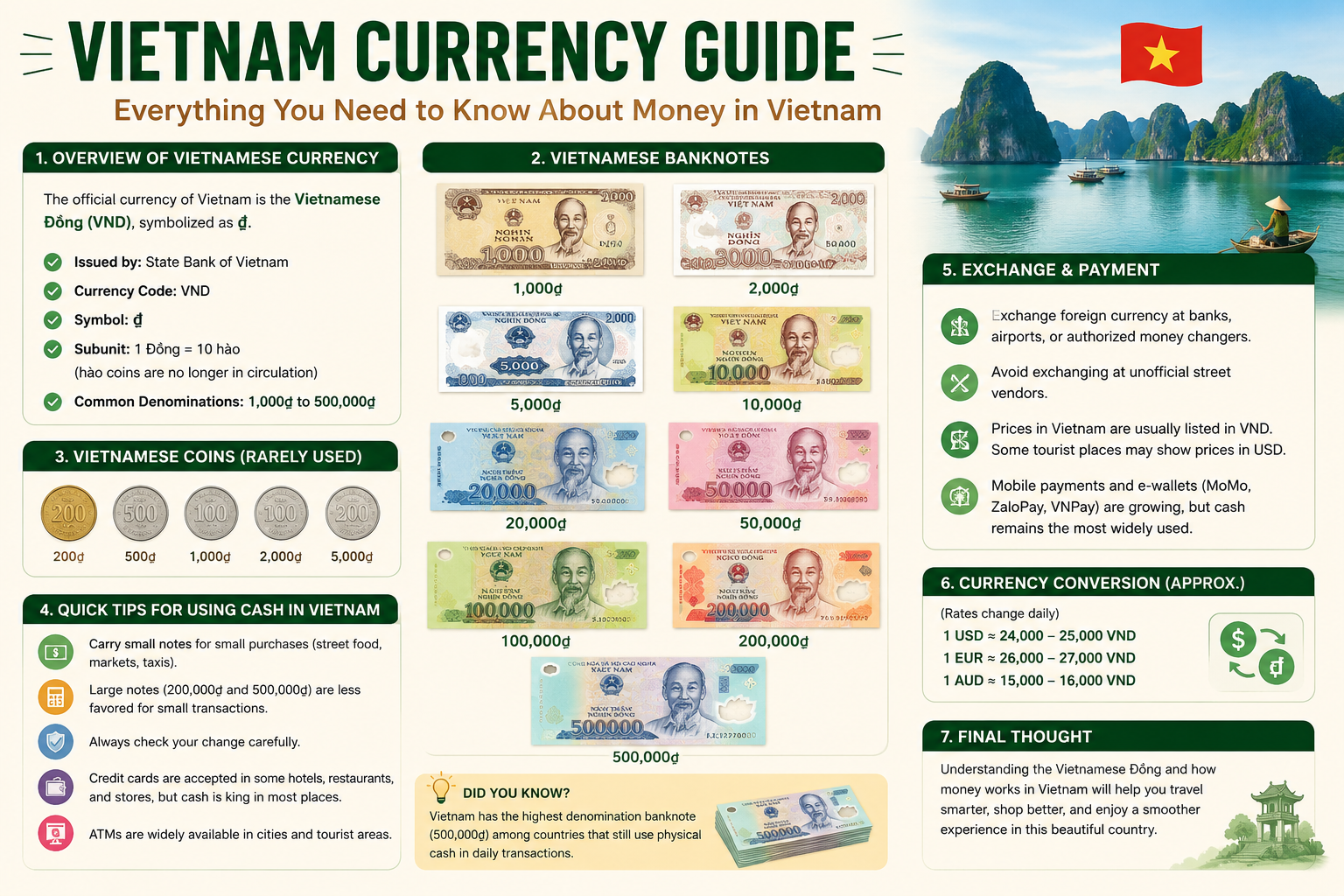
When planning a trip to Vietnam, understanding the local currency is just as important as booking flights, arranging accommodation, or applying for a visa. Fortunately, managing money in Vietnam is relatively easy, and travelers can enjoy excellent value compared to many destinations around the world.
Whether you’re visiting Hanoi, cruising through Ha Long Bay, exploring Hoi An, trekking in Sapa, or relaxing on the beaches of Phu Quoc, knowing how Vietnam’s currency system works will help you avoid confusion and make your trip more enjoyable.
Moreover, understanding exchange rates, payment methods, and budgeting can help you save money throughout your journey.
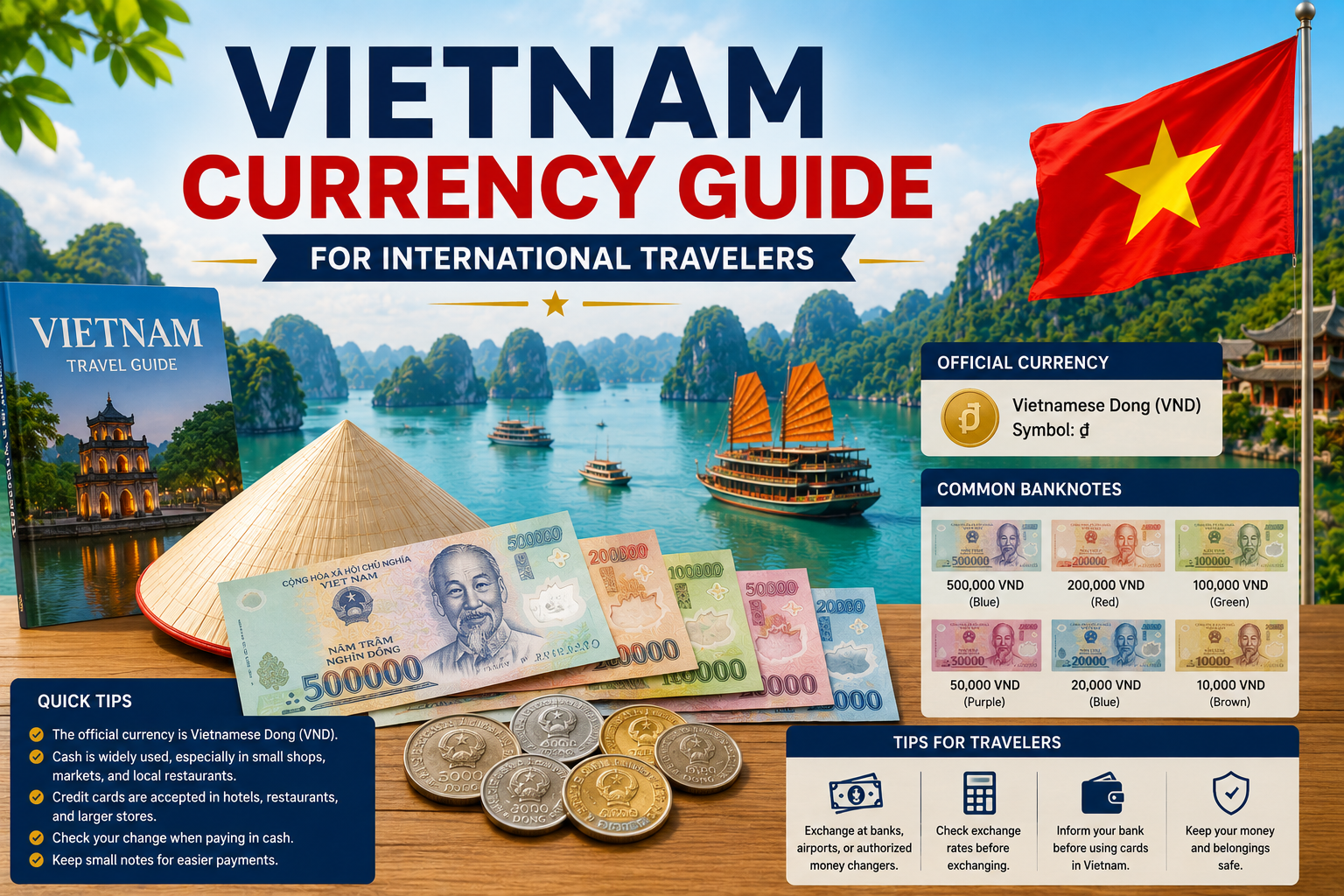
The official currency of Vietnam is the Vietnamese Dong (VND).
Currency Code:
VND
Currency Symbol:
₫
The Vietnamese Dong is used throughout the country
Unlike many Western currencies, Vietnamese banknotes often contain larger numbers. Therefore, first-time visitors may initially find the currency confusing.
For example:
may seem like huge amounts, but they are quite normal for daily travel expenses.
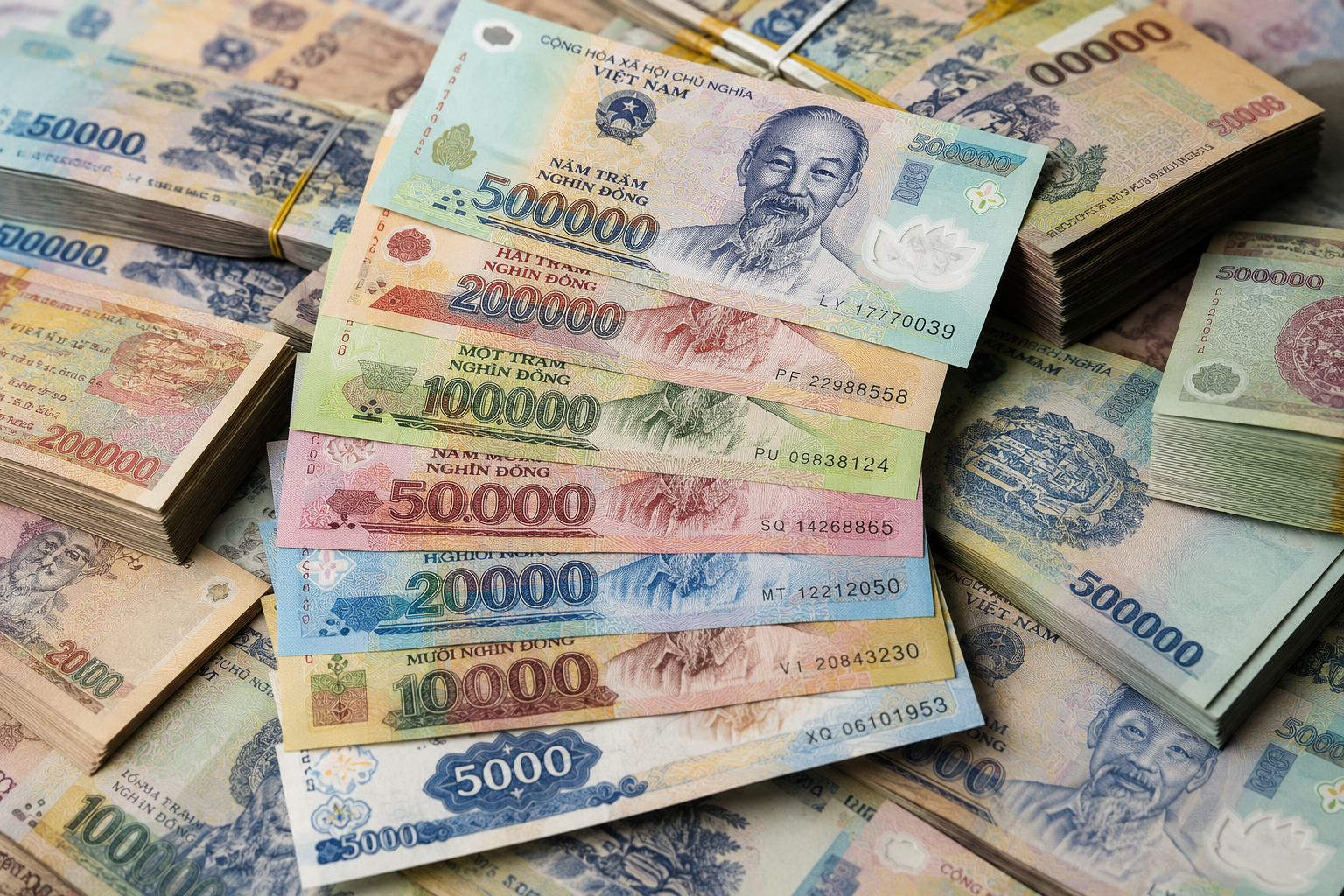
Vietnam primarily uses paper and polymer banknotes.
Common denominations include:
The 500,000 VND note is the highest-value banknote commonly used in Vietnam.
Travelers should pay close attention because some notes have similar colors and sizes.
Exchange rates fluctuate regularly depending on global financial markets.
Generally, travelers from:
often find Vietnam to be a very affordable destination.
As a result, many visitors are surprised by how far their travel budget can stretch.
How Much Does a Trip to Vietnam Cost
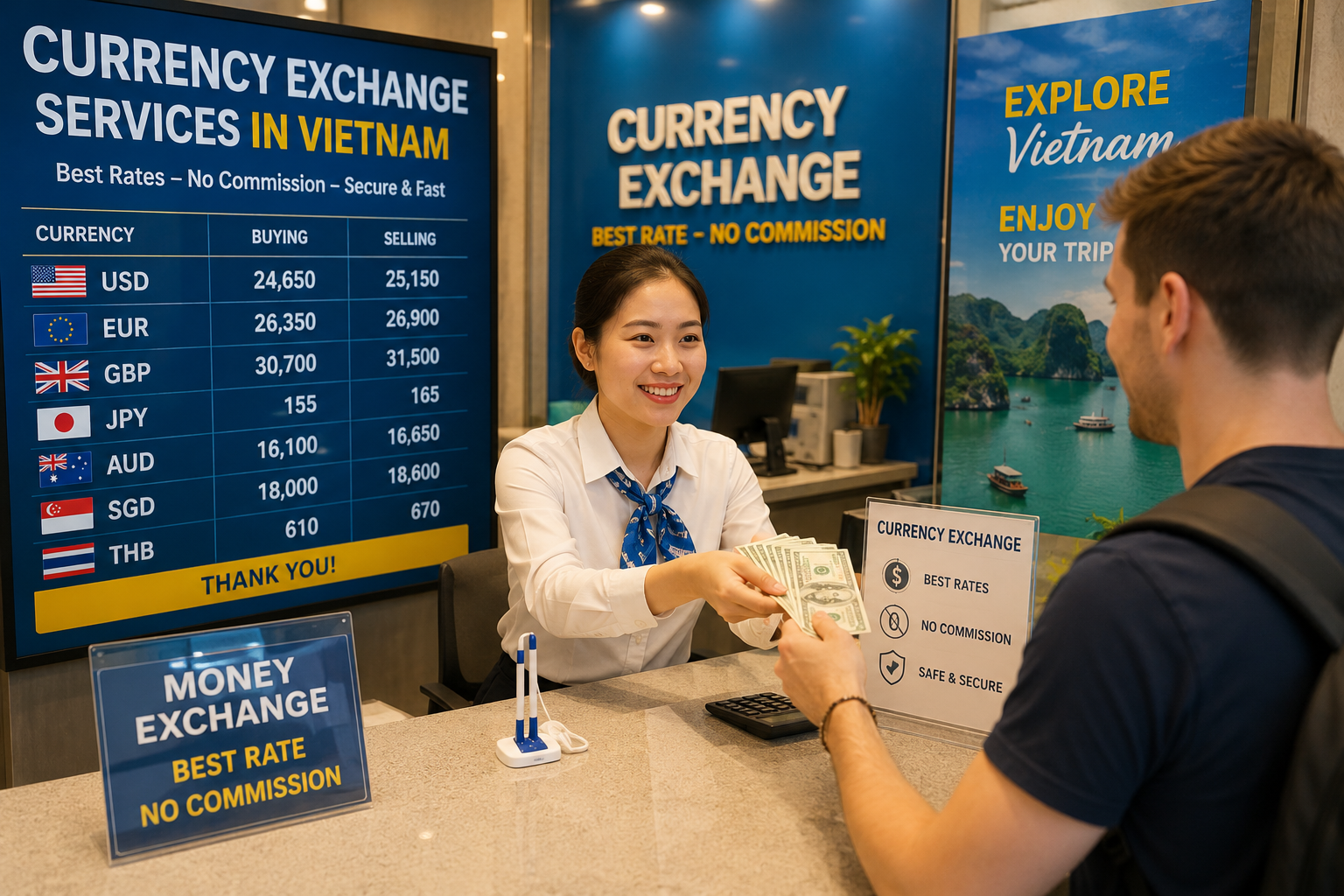
Fortunately, exchanging money in Vietnam is straightforward.
Advantages:
Often available in:
Some hotels offer exchange services.
However, rates may not always be the most competitive.
In certain cities, licensed gold shops may provide currency exchange services.
Always verify legitimacy before exchanging money.
Yes.
Although digital payments are becoming increasingly popular, cash remains essential in many situations.
Cash is commonly used for:
Therefore, carrying some Vietnamese Dong is highly recommended.
Absolutely.
Major credit cards are accepted in many locations, especially in tourist areas.
Commonly accepted cards include:
You can typically use cards at:
Nevertheless, some smaller businesses may charge additional card processing fees.
Yes.
ATMs are widely available across Vietnam.
You’ll find them in:
Benefits include:
Before traveling, check with your bank regarding international withdrawal fees.
The best approach is to use both.
Consequently, combining cash and card payments provides maximum flexibility.
The amount depends on your travel style.
Recommended Daily Budget:
$25–45
Recommended Daily Budget:
$60–120
Recommended Daily Budget:
$200+
To avoid common mistakes, consider the following advice.
Vietnamese Dong uses large numbers.
Useful for:
This helps prevent card security issues.
Compare rates before exchanging large amounts.
This improves security and reliability.
Money management should be part of your overall trip planning.
Before departure, travelers should consider:
Furthermore, understanding seasonal conditions can help travelers estimate transportation costs and choose the most suitable destinations.
Likewise, selecting the right travel season may help reduce hotel prices and airfare costs.
Many travelers make avoidable mistakes during their first visit.
Some notes look similar.
Smaller businesses may not have change.
Rates are often less favorable.
Always check withdrawal charges beforehand.
Keep an additional payment method available.
Vietnam uses the Vietnamese Dong (VND).
Some tourism businesses may accept US Dollars, but Vietnamese Dong remains the preferred and official currency.
Not entirely. While digital payments are growing rapidly, cash is still widely used.
Yes. Major hotels, restaurants, and tourist businesses commonly accept international credit cards.
It depends on your travel style, but most travelers should budget according to accommodation, transportation, food, and activities.
Understanding Vietnam’s currency system is an essential part of travel planning. Fortunately, the Vietnamese Dong is easy to use once you become familiar with the denominations and payment methods.
Whether you’re exploring bustling cities, cruising through Ha Long Bay, wandering the lantern-lit streets of Hoi An, or enjoying a luxury beach resort in Phu Quoc, proper money management will help you travel more confidently and comfortably.
By combining cash, cards, and smart budgeting, you’ll be well prepared for an unforgettable journey through Vietnam.


