
 admin
06/15/2026
admin
06/15/2026
Traveling to Vietnam is an exciting experience filled with cultural discoveries, breathtaking landscapes, delicious cuisine, and unforgettable adventures. However, like any international trip, unexpected situations can occur. Flight delays, medical emergencies, lost luggage, and travel disruptions can affect even the most carefully planned itinerary.
For this reason, travel insurance has become an essential part of modern travel planning. Whether you’re visiting Vietnam for a short holiday, a family vacation, a honeymoon, or an extended backpacking trip, having the right travel insurance can provide valuable financial protection and peace of mind.
In this guide, you’ll learn what travel insurance covers, how much it costs, what type of policy to choose, and how to stay protected during your journey in Vietnam.
Vietnam Travel Guide
Although Vietnam is generally considered a safe destination for tourists, unexpected situations can happen anywhere.
Common travel risks include:
Without travel insurance, travelers may need to cover these expenses themselves.
Furthermore, healthcare costs for foreign visitors can become expensive, especially if hospitalization or emergency evacuation is required.
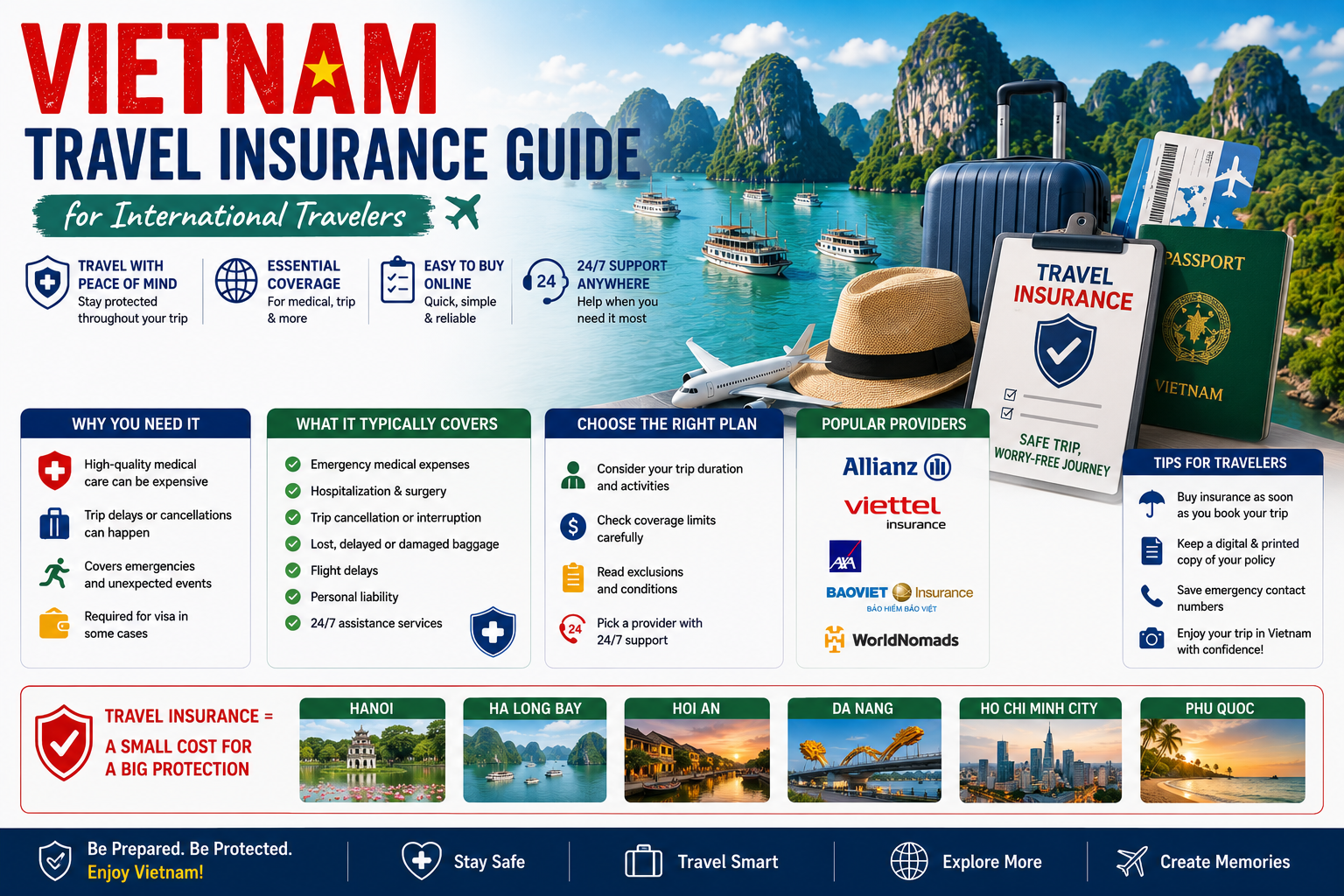
In most cases, travel insurance is not a mandatory requirement for entering Vietnam.
However, many experienced travelers strongly recommend purchasing insurance before departure.
Travel insurance is particularly important if you plan to:
Insurance provides an additional layer of protection throughout your trip.
Coverage varies depending on the provider and policy.
However, most travel insurance plans include the following protections.
This is often the most important part of a policy.
Coverage may include:
Medical expenses can quickly become costly without insurance.
In serious situations, travelers may need transportation to a larger medical facility or even repatriation to their home country.
Evacuation costs can reach thousands of dollars.
Therefore, emergency evacuation coverage is highly recommended.
Unexpected events may force travelers to cancel or postpone a trip.
Covered reasons often include:
Trip cancellation protection can help recover prepaid travel expenses.
If your trip must be shortened after departure, insurance may reimburse eligible costs.
Examples include:
Lost baggage is one of the most common travel issues worldwide.
Insurance may help cover:
Some policies include liability protection if a traveler accidentally causes injury or property damage.
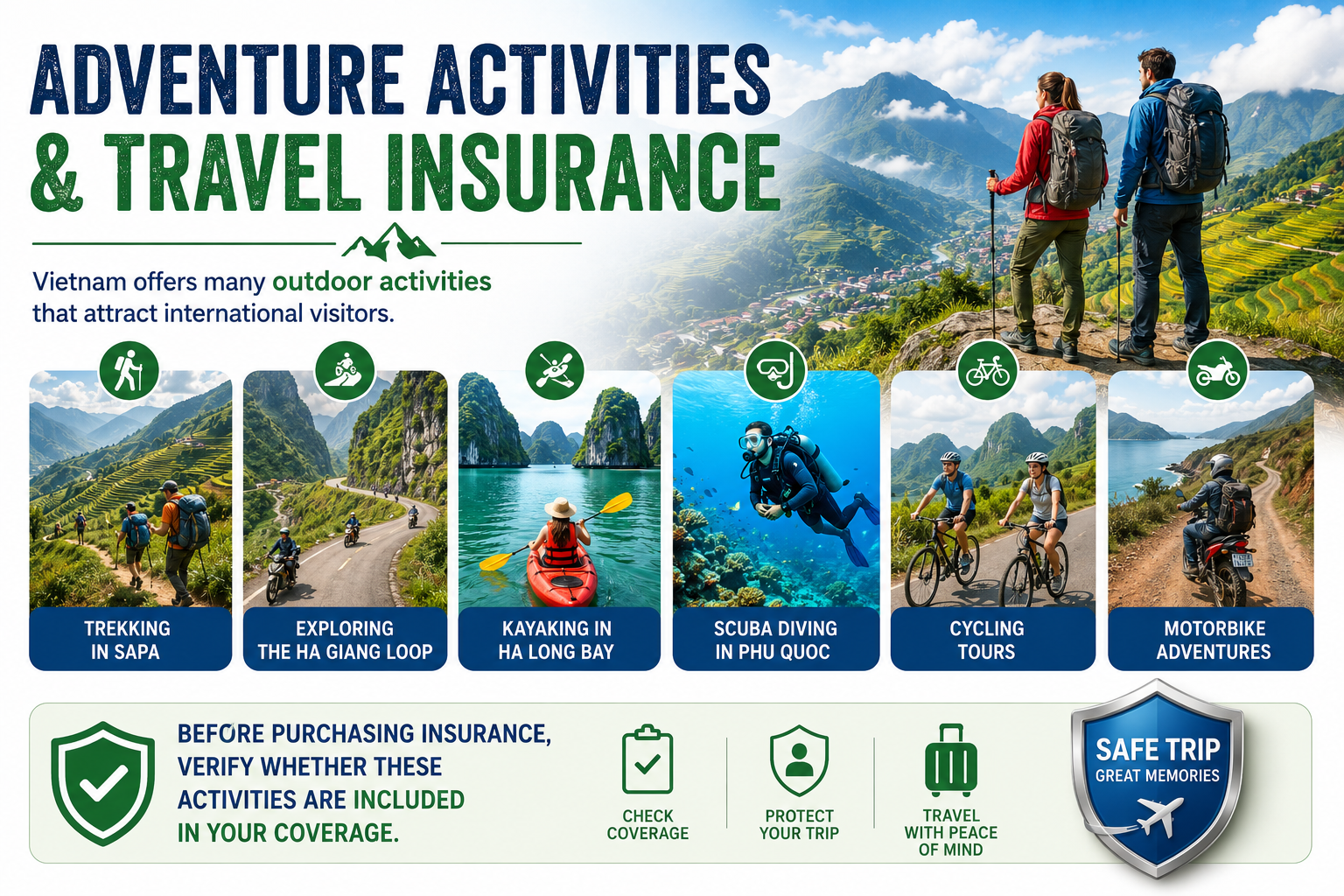
Vietnam offers many outdoor activities that attract international visitors.
Popular examples include:
Before purchasing insurance, verify whether these activities are included in your coverage.
Travel insurance is usually one of the smallest expenses in an overall travel budget.
The price depends on:
General estimates:
| Trip Length | Typical Insurance Cost |
| 1 Week | $15–40 |
| 2 Weeks | $25–80 |
| 1 Month | $50–150 |
| Long-Term Travel | Varies by provider |
For most travelers, insurance costs represent only a small percentage of the total trip budget.
Not all policies are the same.
When comparing options, consider the following factors.
Higher medical coverage generally provides stronger protection.
Especially important for travelers visiting remote regions.
Check whether your planned activities are covered.
Useful for travelers carrying cameras, laptops, or valuable equipment.
Look for providers offering 24/7 emergency assistance.
Vietnam offers a growing healthcare system with both public and private facilities.
Many international travelers choose private hospitals due to:
Major cities with reputable healthcare options include:
Travel insurance can help reduce unexpected medical expenses when using these services.
Weather conditions occasionally affect transportation schedules in Vietnam.
Examples include:
Having travel insurance may help cover certain eligible disruptions.
Many travelers purchase insurance without fully understanding their coverage.
Avoid these common mistakes:
Lower-cost plans may offer limited protection.
Always review policy exclusions carefully.
Early purchase often provides stronger protection.
Motorbike riding, trekking, and water sports may require additional coverage.
Save both digital and printed copies.
Before arriving in Vietnam, travelers should keep copies of:
In case of an emergency:
Being prepared can significantly simplify the claims process.
Travel insurance is not usually mandatory, but it is strongly recommended for international travelers.
Most comprehensive policies include emergency medical coverage, subject to policy terms.
Some policies do, while others exclude motorbike-related incidents. Always review coverage details carefully.
Most travelers spend between $15 and $150 depending on trip length and coverage level.
For many travelers, the protection against medical emergencies, cancellations, and travel disruptions makes travel insurance a worthwhile investment.
Vietnam remains one of the most rewarding destinations in Asia, offering incredible experiences for every type of traveler. However, even the best-planned trips can encounter unexpected challenges.
A suitable travel insurance policy can provide valuable protection against medical emergencies, travel disruptions, lost luggage, and other unforeseen situations. More importantly, it allows travelers to explore Vietnam with greater confidence and peace of mind.
Before your journey begins, take the time to compare policies, understand coverage details, and choose a plan that matches your travel style. A small investment in travel insurance today could save significant expenses and stress later.


